
Dak Lak Interior Website Design for Showrooms and Contractors
- Published on


Interior customers need more than attractive photographs. They want to understand materials, price ranges, completed work, and what happens before an onsite survey. A Dak Lak interior website should therefore help them move from catalog review and portfolio evaluation to a useful request that the sales team can process.
RiverLee designs that journey for showrooms, workshops, and contractors. If you already have a product list, project photographs, or an existing website, contact 0962.334.807 so we can review the structure and scope before preparing a quotation.
How does RiverLee build an interior website around the sales process?
RiverLee begins with the consultation workflow: what prospects need to see, which details sales staff use to qualify a request, and when an onsite survey is required. The website is then organized into catalogs, project portfolios, materials content, forms, and confirmation steps. This helps prospects assess capability before making contact and reduces repetitive questions for the team.
The project may use WordPress for convenient product updates or Next.js for performance and custom integrations. RiverLee has more than two years of practical experience and has built and operated over 100 websites. Delivery covers discovery, structure, design, development, testing, training, and a 12-month warranty under the agreed contract scope. These are capability indicators, not promises of rankings or revenue.
A company with inconsistent data can begin with a core catalog and selected projects, then expand after its team learns the publishing workflow. This is often more useful than importing hundreds of incomplete products or commissioning 3D features without production-ready media.
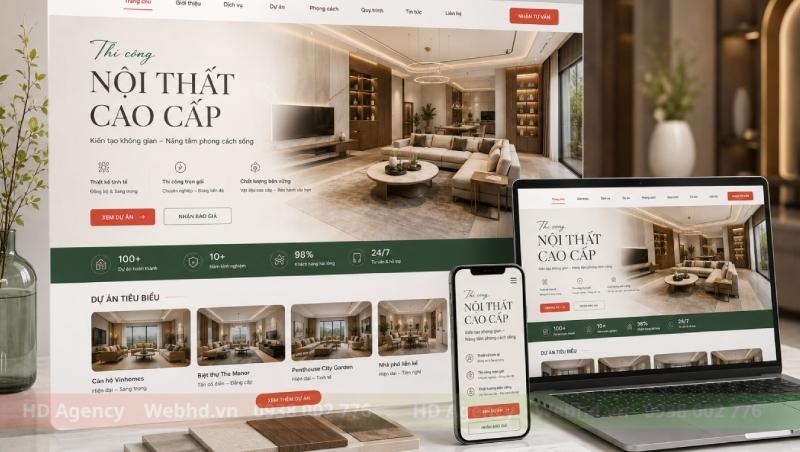
How do customers assess an interior supplier?
Market overview
Demand may come from product buyers, homeowners seeking design and construction, or companies fitting out commercial and office spaces. Product buyers care about dimensions, materials, price, and delivery. Project clients care about style, comparable work, the survey process, and warranty scope.
Online search trends
During research, customers may use queries such as:
- "furniture showroom Buon Ma Thuot"
- "living room furniture Dak Lak"
- "sofa set Buon Ma Thuot good price"
- "wooden furniture factory in Dak Lak"
These phrases illustrate customer needs; they are not a keyword list to repeat. The website should answer with real products, projects, and business information. Visibility still depends on competition and trust; learn how local SEO works and use Search Console to monitor real queries.
Why does a furniture showroom in Dak Lak need its own website?
Let customers review the offer before visiting
A website lets customers review categories, materials, price ranges, and projects before visiting a showroom or requesting a survey. Staff do not need to resend the same image sets through multiple conversations, while customers can save and compare options.
Build brand and trust
Interior projects often require several checks before a deposit. Real project media, documented scope, materials, process, and company information help prospects assess capability. Publish projects and reviews only with permission.
Reach customers beyond your network
Social media supports visual discovery and interaction, while a website lets prospects review catalogs, projects, materials, and quote conditions systematically. Using both supports existing audiences and people actively researching a supplier.
Build an information base the company controls
Campaigns and social media can create discovery, while the website stores catalogs, projects, and advice in a stable structure. It does not guarantee lower advertising costs or revenue, but it gives the company an owned, measurable information source.
Related reading: If you're new to how projects run, read our 6-step website design process to understand each phase from consultation to handover.
Seven elements to prioritize in the consultation journey
Not every showroom or contractor needs all seven elements at launch. Prioritize the parts that help prospects assess capability and give sales staff enough data to respond.
1. A structured product catalog
Organize the catalog by room, product type, or use case. Each item should include images, dimensions, materials, colors, a price range or quotation method, and production conditions. Consistent data helps prospects compare and staff update content.
2. Product filters by style and material
Filters are useful only when product data is complete and consistent. Large catalogs can filter by style, material, room, and price range; a small catalog may be easier to navigate with clear categories.
3. Project portfolios with context
A useful project page explains the space type, area, original requirement, scope, materials, solution, and timeline when disclosure is permitted. These details help prospects identify work comparable to their own needs.
4. A consultation or survey-request form
The form may ask for space type, area, location, preferred style, budget, and timing. Collect only information the team will use, explain the next step, and test the receiving workflow so requests are not overlooked.
5. Contact channels with accountable owners
The website can connect phone, Zalo OA, email, or the channels the company actually maintains. Each channel needs an owner, a response schedule, and a shared process for recording requests.
6. Content that supports the decision
Articles about materials, dimensions, maintenance, layouts, and construction preparation help prospects get ready for consultation. Content should reflect real expertise and be reviewed when products or standards change.
7. Mobile-responsive design and speed
Customers often browse galleries and request quotes from a phone. Serve correctly sized modern image formats, lazy-load below-the-fold media, and evaluate Core Web Vitals with real-user data.
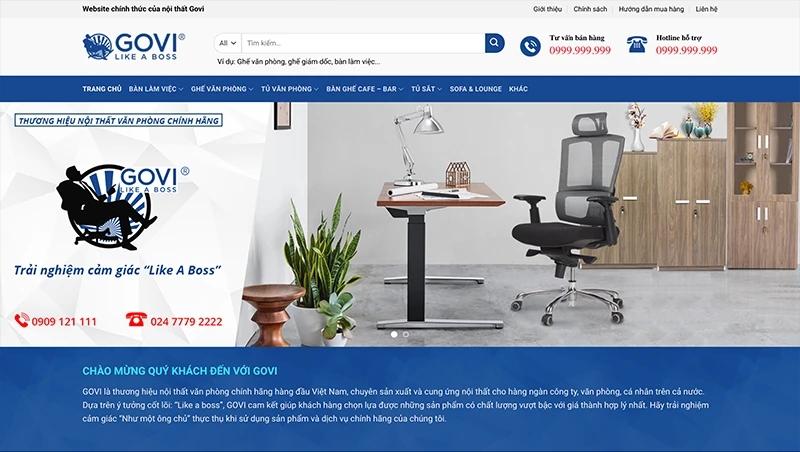
Related: Interior website design — RiverLee's complete interior website solution.
Interior website design cost in Dak Lak
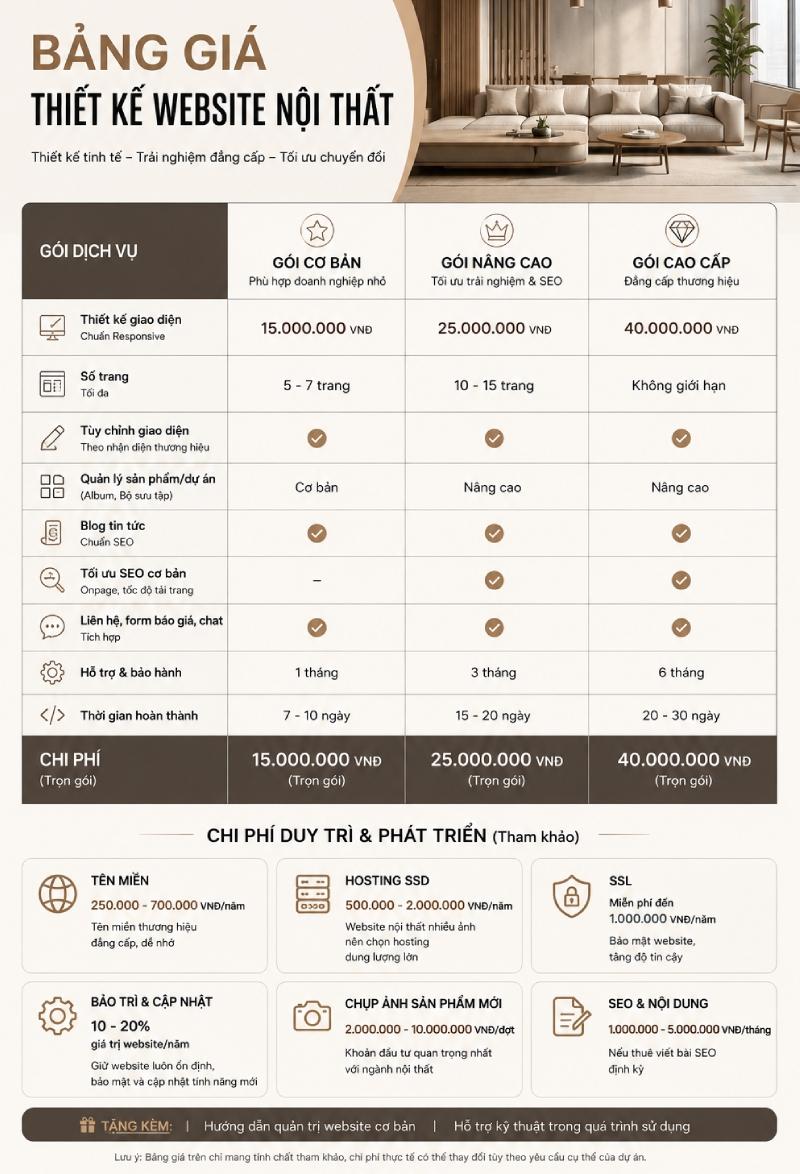
The cost of designing an interior website in Dak Lak depends on product scale, features, and level of customization. Here is the 2026 pricing by segment:
Pricing scope: RiverLee offers introductory websites from VND 2,000,000 and a Premium starting package from VND 5,000,000. The ranges below apply when a project includes a catalog, project gallery, filters, or a specialized quote workflow; the final quote depends on the agreed scope.
| Package | Key features | Cost (VND) | Timeline |
|---|---|---|---|
| Introduction | 5-10 pages, product gallery, contact form, mobile-responsive | 3,000,000 - 7,000,000 | 7-15 days |
| Professional sales | Product filters, project page, Zalo OA, blog, SEO optimization | 7,000,000 - 15,000,000 | 15-25 days |
| Premium | Fully custom design, 3D/VR tours, multi-language, payment integration | 15,000,000 - 40,000,000+ | 25-45 days |
Note: The prices above exclude professional product photography and annual running costs. For a detailed price breakdown and the 7 factors that drive interior website costs, see RiverLee's dedicated pricing guide.
Annual costs to budget for
- Domain: 250,000 - 700,000 VND/year
- SSD hosting: 500,000 - 2,000,000 VND/year (image-heavy interior sites need generous storage)
- SSL: free up to 1,000,000 VND/year
- Maintenance & updates: 10-20% of the website value per year
- New product photography: 2,000,000 - 10,000,000 VND per session (the single most important investment in furniture)
- SEO & content: 1,000,000 - 5,000,000 VND/month if you outsource regular SEO articles
If you are unsure whether to begin with a catalog, portfolio, or survey form, contact 0962.334.807. RiverLee will review your product data, project media, and consultation workflow before defining the scope.
Measuring an Interior Website After Launch
An interior website should be assessed with data from the showroom or workshop, not a sample result applied to every business. Before development, record the current quote-request baseline and define what counts as a valid lead.
Useful metrics include:
- Valid quote requests by product group, project type, and source
- The percentage of gallery or project viewers who open a form, call, or start a Zalo conversation
- Response time and the percentage of inquiries reached successfully
- New products and projects published, plus the time required to update them
- Search queries, clicks, and landing pages in Google Search Console
Compare equivalent periods and account for advertising, construction seasonality, product range, and sales capacity. The website helps prospects assess capability and request a quote, but it cannot guarantee rankings or revenue.
Should you build it yourself or hire a provider?
DIY can suit a small website with simple data when someone has time to learn updates, backups, and troubleshooting. A provider is more appropriate for custom design, structured catalogs, filters, integrations, testing, and accountable handover.
| Criterion | DIY website | Professional agency |
|---|---|---|
| Upfront cost | Lower when you prepare content and configuration yourself | Higher because it includes design, development, and testing |
| Timeline | Depends on experience and available learning time | Follows an agreed plan and approval schedule |
| SEO quality | You configure and verify the foundation yourself | Technical requirements can be included in acceptance |
| Technical support | You handle everything | Support follows the agreed warranty and maintenance scope |
| Feature expansion | Depends on the platform and administrator's skills | Estimated against the architecture and new scope |
If you need only one or two introduction pages and have a technical owner, WordPress DIY may be enough. For a large catalog, filters, project portfolios, or survey workflows, include data preparation and ongoing operation in the decision.
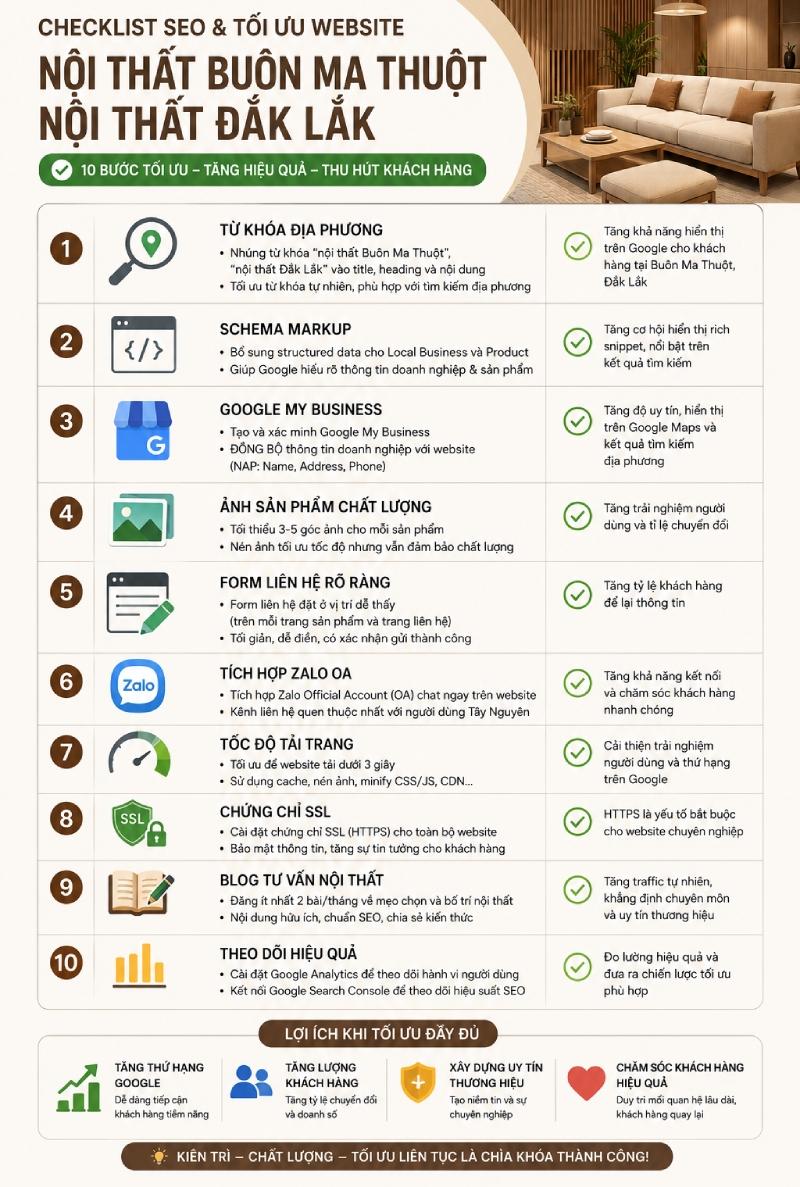
Checklist: optimizing an interior website for the Dak Lak market
Use this checklist to make sure your website meets the needs of the local market:
- Local information — Describe the real showroom, workshop, survey area, and delivery coverage
- Schema markup — Use only structured-data types that match visible, verifiable content
- Google Business Profile — Keep your business info in sync with the website
- Product and project media — Use licensed, accurately captioned, appropriately compressed assets
- Catalog data — Standardize names, codes, dimensions, materials, colors, and quotation methods
- Survey forms — Collect space type, area, location, budget, and preferred timing when useful
- Response channels — Display only channels that someone actively monitors
- HTTPS and data — Protect the connection, limit collected data, and control access
- Current content — Add projects, materials, and policies when information changes
- Measurement — Track valid requests, source, and response time rather than visits alone
Related reading: An interior website also needs a solid technical foundation. See our hosting price comparison and how to choose a domain to keep operating costs in check.
Frequently asked questions (FAQ)
How long does interior website design take in Dak Lak?
It depends on the package: the introduction package takes 7-15 days, the professional sales package 15-25 days, and the premium package 25-45 days. The timeline also depends on how quickly you supply content and product photos.
What is a reasonable price for an interior website in Dak Lak?
The ranges in this guide are VND 3–15 million for an introduction site through a catalog and request workflow, or VND 15–40 million for more customized 3D, multilingual, or payment work. Compare templates, data volume, ownership, warranty, and acceptance criteria rather than judging price alone.
What do I need to prepare to get started?
You'll need: your list of furniture products (names, materials, prices, photos), photos of completed projects (if any), website goals (introduction, sales, lead generation), and a budget.
Do I need professional photography for my interior website?
Prioritize clear images that represent color, scale, and material details responsibly. Whether professional photography is necessary depends on product value, volume, and existing assets. Request quotations by product count, setup, editing, and usage rights rather than assuming one budget.
Does an interior website need regular SEO content?
Publish when the business has useful expertise to share, such as material selection, dimensions, maintenance, or survey preparation. No fixed frequency suits every website. Accuracy, expert review, and timely updates matter more than volume.
How do I get my website to appear when people search "furniture Buon Ma Thuot"?
Provide useful content, keep Google Business Profile consistent, use LocalBusiness only when eligible, and publish real projects. Track Search Console and qualified inquiries; do not treat a ranking as guaranteed.
Conclusion
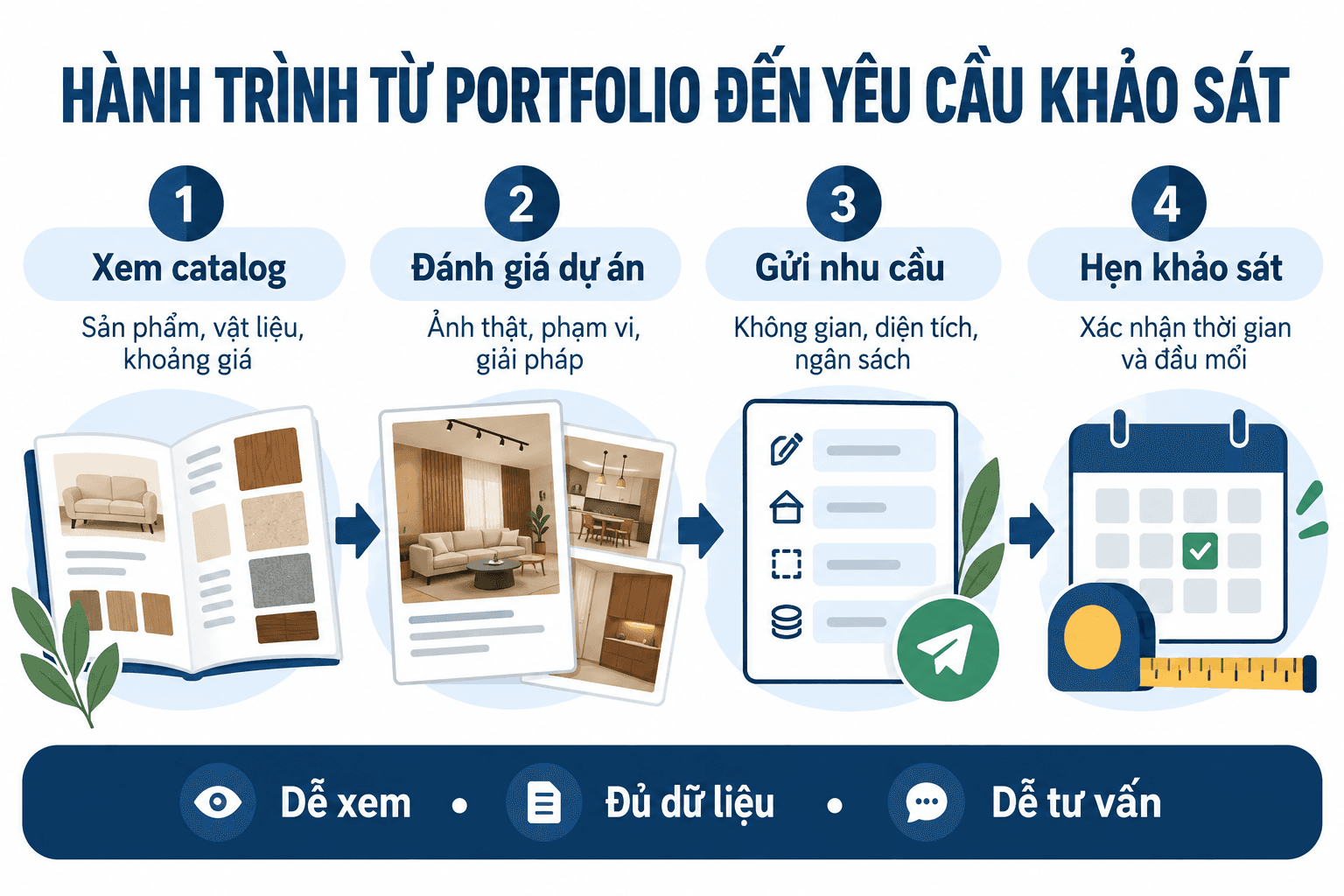
An effective Dak Lak interior website moves prospects through four clear stages: catalog review, project evaluation, requirement submission, and survey scheduling. Attractive media is only the start; structured product data, project context, and a consistent response process make the site useful to the sales team.
RiverLee can help structure the catalog, build the portfolio, design the survey workflow, and train the team to maintain it. Contact 0962.334.807 to discuss your current data and receive a scope-based quotation. The website includes a 12-month warranty under the agreed contract terms.
Related tags:
Interior website design Dak LakInterior web design Buon Ma ThuotFurniture showroom websiteDak Lak interior websiteInterior website costInterior website SEOComments
0 Comment(s)
Loading...
Latest Posts

Web Design by Province and City: Vietnam Location Guides
Browse RiverLee's Vietnam web design guides by province and city, with location-specific advice on business models, scope, costs, local SEO and acceptance.

Vung Tau Web Design for Tourism and Local Businesses
A Vung Tau web design guide for tourism, services, and B2B companies covering structure, features, costs, local SEO, delivery, and acceptance testing.

Quang Ngai Web Design for Tourism, Industry and B2B
Quang Ngai web design for Ly Son tourism, accommodation, local products, and Dung Quat B2B: structure, features, pricing, process, and QA checklist.

Ninh Binh Web Design for Tourism and Local Businesses
Ninh Binh web design for heritage tourism, accommodation, and businesses: content structure, features, pricing, local SEO, process, and acceptance checks.
Related Posts
Web Design by Province and City: Vietnam Location Guides
Browse RiverLee's Vietnam web design guides by province and city, with location-specific advice on business models, scope, costs, local SEO and acceptance.
Vung Tau Web Design for Tourism and Local Businesses
A Vung Tau web design guide for tourism, services, and B2B companies covering structure, features, costs, local SEO, delivery, and acceptance testing.
Quang Ngai Web Design for Tourism, Industry and B2B
Quang Ngai web design for Ly Son tourism, accommodation, local products, and Dung Quat B2B: structure, features, pricing, process, and QA checklist.
Ninh Binh Web Design for Tourism and Local Businesses
Ninh Binh web design for heritage tourism, accommodation, and businesses: content structure, features, pricing, local SEO, process, and acceptance checks.
